

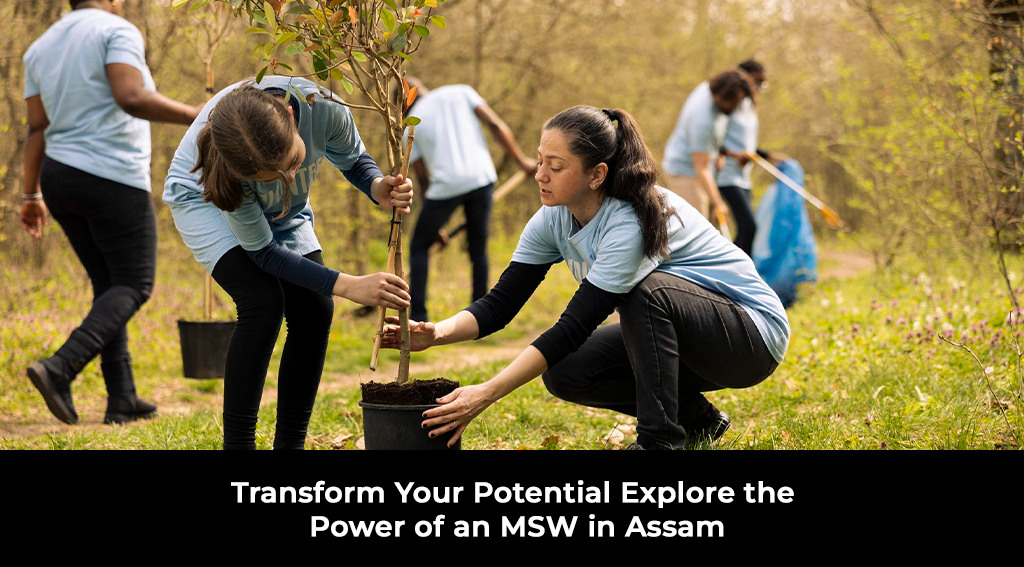
A Master of Social Work (MSW) can help you turn your passion for helping people into a meaningful career in community development, social welfare, healthcare, and education. If you want to create positive change while building professional skills, pursuing an MSW in Assam can be a valuable step towards your goals.
Build a Career That Creates Real Change
Social work is about understanding people, addressing community challenges, and helping individuals access the support they need. From working with children and older adults to supporting rural communities and disadvantaged groups, social workers contribute to a more inclusive society.
An MSW combines academic knowledge with practical exposure, preparing students to understand social issues and develop solutions. It is particularly suitable for graduates who want their professional lives to contribute to meaningful social outcomes.
MSW in Assam: What Makes the Course Special?
Assam offers opportunities to explore social development in a region shaped by diverse communities, languages, livelihoods and geographical conditions. Issues such as access to education and healthcare, rural development, disaster rehabilitation, and community welfare create relevant contexts for learning about social work.
When exploring an MSW course in Assam, consider how the curriculum connects classroom learning with real community needs.
Look for a programme that offers:
- Practical fieldwork and supervised community engagement.
- Training in social research and programme planning.
- Exposure to non-governmental organisations (NGOs) and welfare initiatives.
- Opportunities to understand public policy and social development.
- Guidance from experienced faculty and access to relevant learning resources.
For prospective students, the right programme should support both academic growth and personal development.
What Will You Learn During an MSW?

An MSW generally covers the principles, methods, and practices required to work with individuals, groups, and communities. Exact subjects depend on the university and its curriculum.
Common areas of study include:
- Social work practice: Understanding individual, group and community-based interventions.
- Community development: Identifying local needs and planning practical solutions.
- Social policy: Exploring welfare systems, public programmes and social justice.
- Research methods: Collecting, interpreting and applying information to social problems.
- Human behaviour: Understanding how family, society and the environment influence people’s lives.
- Field education: Applying theoretical knowledge through supervised practical experiences.
MSW course duration and learning experience
The MSW course typically lasts two years and is divided into four semesters at many Indian universities. However, students should confirm the duration, semester structure, eligibility requirements, and fieldwork components in their chosen institution’s current prospectus.
A well-structured programme combines classroom discussions, assignments, research, and field exposure. This blend helps students understand not only why social problems occur but also how to design and evaluate interventions.
Skills You Gain Along the Way
Social work requires more than good intentions. Professionals must communicate effectively, assess situations objectively, and work with people from different backgrounds.
During your studies, you can develop skills such as:
- Communication, active listening and empathy.
- Problem-solving and conflict resolution.
- Project coordination and community mobilisation.
- Research, report writing and documentation.
- Teamwork, leadership and professional ethics.
- Awareness of social policy and welfare systems.
Personalisation also matters when planning your education. Consider your preferred career setting, existing strengths and long-term ambitions before selecting electives, internships or research topics where these options are available. Discussions with an academic adviser help identify a suitable learning pathway.
Career Opportunities After MSW
A postgraduate social work qualification can open pathways across the development sector, public services, healthcare and community organisations. Actual eligibility depends on the employer, job description, relevant experience and applicable recruitment requirements.
Potential roles could be:
- Social worker or community development officer.
- NGO programme coordinator.
- Project associate or development professional.
- Medical or psychiatric social work professional, subject to role-specific requirements.
- Child welfare or family support worker.
- Research assistant or social research associate.
- CSR programme executive.
- Rehabilitation or community outreach worker.
The WHO projects a shortage of 11 million health workers by 2030, highlighting the growing importance of healthcare social work, patient support and community outreach.
When considering a career after MSW, look beyond job titles. Think about the population you want to support, the working environment you prefer, and whether you would enjoy direct service delivery, research, programme management, or advocacy.
Exploring the career scope in Assam
The landscape of MSW jobs in Assam includes opportunities with NGOs, community-based organisations, hospitals, educational institutions, development projects, and government-supported welfare initiatives, depending on vacancies and eligibility criteria.
Students can also investigate rural development projects, livelihood programmes, child protection initiatives and disaster response organisations. These settings may offer experience in coordinating services, engaging communities and assessing programme outcomes.
The broader range of jobs after MSW may extend to other Indian states and, where appropriate qualifications and experience are accepted, international development organisations.
How to Choose the Right MSW College
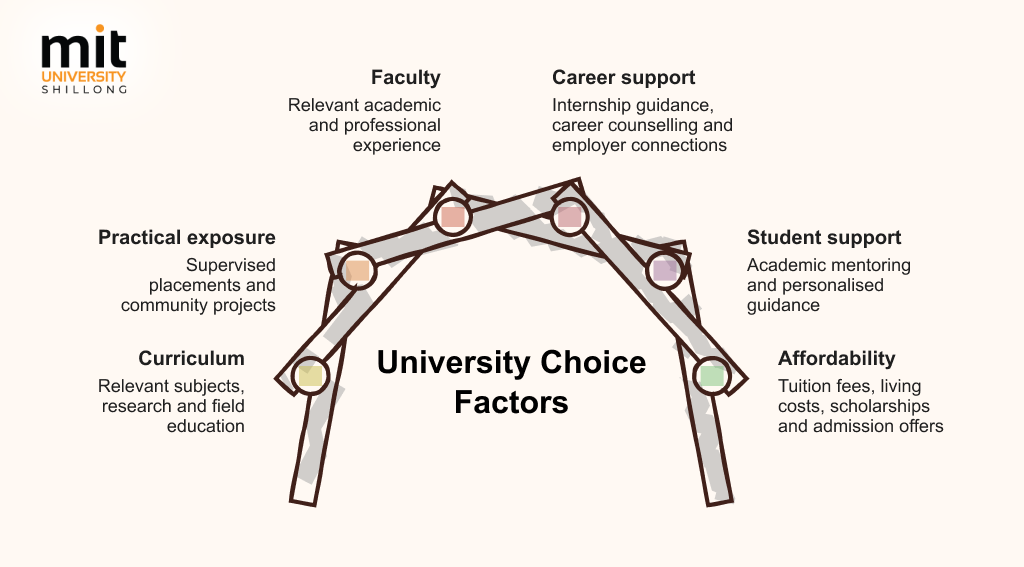
Choosing a university is an important investment in your future. Rather than relying on rankings or promotional claims alone, compare the academic experience and practical opportunities available.
| Factor | What to look for |
| Curriculum | Relevant subjects, research and field education |
| Practical exposure | Supervised placements and community projects |
| Faculty | Relevant academic and professional experience |
| Career support | Internship guidance, career counselling and employer connections |
| Student support | Academic mentoring and personalised guidance |
| Affordability | Tuition fees, living costs, scholarships and admission offers |
When comparing MSW colleges in Assam, review official course details, recognition, practical training, and placement information. Students also considering MSW colleges in Guwahati should compare the same factors rather than choosing solely on location.
An MSW can be a meaningful choice for graduates who want to combine professional development with social impact. With the right education, practical experience and commitment to ethical practice, you can prepare for opportunities in community development, welfare services, research and programme management.
Your journey towards making a difference starts with an informed decision.
FAQs
Why should I pursue an MSW in Assam?
Assam offers opportunities to study social development in a region with diverse communities and distinct development needs. An MSW can help you build relevant knowledge, research skills, and practical experience for work in social welfare and community development.
Can I work in an NGO after completing an MSW?
Yes. You may apply for suitable positions in NGOs, including programme assistant, community outreach worker, project coordinator, and development professional roles. Requirements vary by organisation, position, and experience.
Can I pursue higher studies after completing an MSW?
Yes. Depending on eligibility requirements, you can consider a PhD, research-focused programmes, specialised postgraduate training or other relevant qualifications to develop expertise in social work, public policy or development studies.
Does an MSW include internships or fieldwork?
Many MSW programmes include fieldwork, supervised placements, or community-based projects. However, the structure and duration vary by university, so check the current curriculum before enrolling.
Leave a Reply