

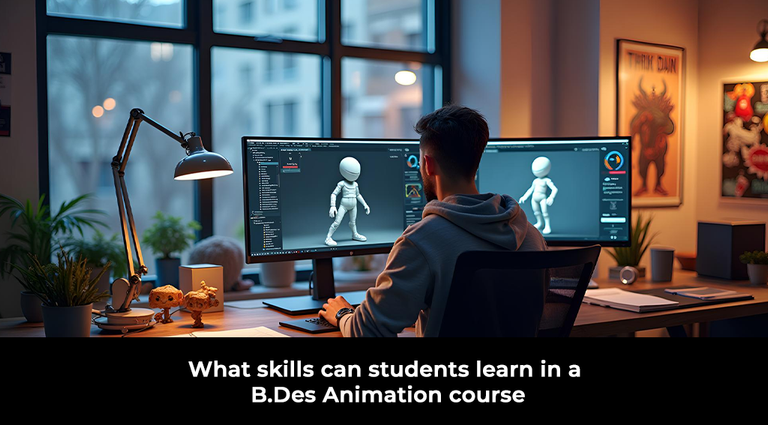
In a Bachelor of Design (B.Des) in Animation, students master kinetic figure drawing, the twelve classical principles of animation, 3D character rigging, procedural texturing, narrative storyboarding, and cinematic compositing. Rather than merely teaching software operation, this four-year curriculum trains students to direct screen acting, assemble spatial environments, and manage complex production pipelines from initial script to final render.
Admissions for the latest academic session are currently open at MIT University India. Applicants who book an early portfolio consultation this week receive dedicated one-on-one portfolio feedback from resident studio animators, giving them a distinct head start before studio courses commence.
Build Your Creative Skill Stack with B.Des Animation
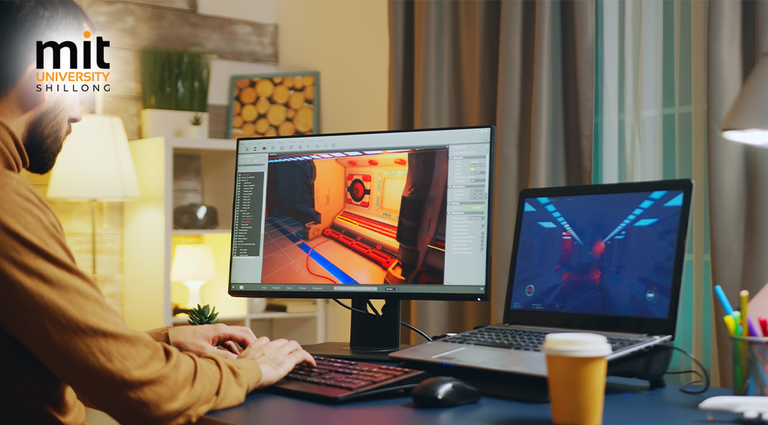
Enrolling in an animation design course equips you with a modular, highly adaptable creative stack. Creative studios seek individuals who combine expressive draftsmanship with production-ready digital versatility. The Press Information Bureau (PIB) National AVGC-XR Policy Report projects the creation of over 20 lakh specialised digital art jobs across India.
Choosing a comprehensive animation course after 12th places you directly inside this expanding job market. MIT University India offers personalised learning tracks, enabling students to tailor their senior studio projects toward 3D gaming pipelines, feature film character animation, or experimental visual development.
Creative Skills: Think Beyond the Ordinary
Creative ideation forms the bedrock of any successful animated production, ensuring that projects have lasting cultural and emotional resonance.
- Ideation and Lateral Thinking: You learn to deconstruct narrative prompts, map visual metaphors, and move past surface-level visual tropes.
- Visual World Logic: Students design physical rules for imaginary spaces, dictating how gravity, culture, and architecture interact within a given story.
- Archetype Reinterpretation: You study classical mythologies and regional folklore, learning how to adapt traditional shapes into fresh cinematic characters.
Students collaborate across design disciplines, joining forces with peers in graphic design and digital media to produce original story bibles ready for studio production.
Drawing Skills: The Foundation of Animation
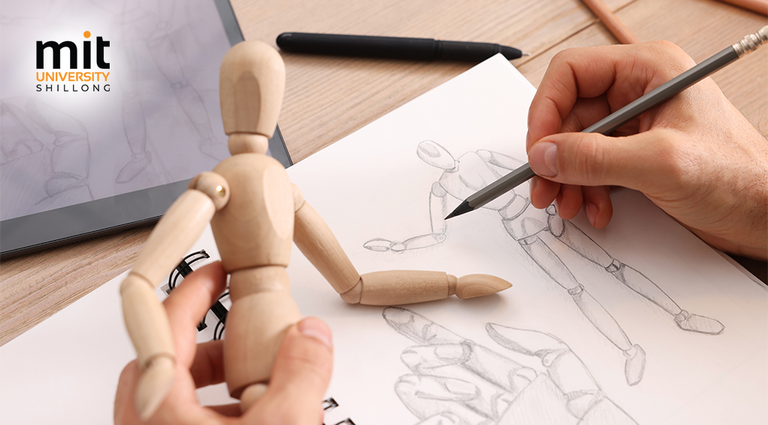
Manual draftsmanship develops your ability to judge perspective, volume, and movement long before you begin working with software.
- Dynamic Gesture Drawing: Quick-sketch sessions using live models help you capture physical momentum, weight distribution, and poses within seconds.
- Kinetic Anatomy: You explore bone architecture and muscle movements for humans and quadrupeds, building characters that run, bend, and jump convincingly.
- Deep Spatial Perspective: Studio exercises cover multi-point, curvilinear, and atmospheric perspective, teaching you to anchor visual subjects in believable space.
These manual drawing hours give you an intuitive understanding of physics, ensuring that your digital models look weighted and physically grounded.
Storytelling Skills: Give Every Frame a Purpose
A sequence of dynamic drawings requires emotional weight and clear dramatic purpose to engage audiences effectively.
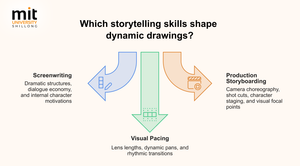
- Screenwriting and Beat Mapping: You study dramatic structures, dialogue economy, and internal character motivations across both episodic and short-film formats.
- Production Storyboarding: You draft sequential beat panels that establish camera choreography, shot cuts, character staging, and visual focal points.
- Visual Pacing and Suspense: Students experiment with lens lengths, dynamic pans, and rhythmic transitions to control audience emotional response.
These narrative competencies empower you to pitch and develop your own original screen projects with professional clarity.
Animation Skills: Make Every Movement Count
Animation is the craft of creating the illusion of autonomous life. An industry-aligned animation design course requires dozens of studio hours dedicated to physical timing and movement mechanics.
- The Twelve Principles: You master practical application of squash and stretch, staging, anticipation, overlapping action, and calculated arcs across varied digital assets.
- Weight, Drag, and Inertia: Studio tasks challenge you to show mass and resistance across diverse materials like stone, viscous liquids, and fabric.
- Emotional Acting and Dialogue: You film human reference footage and translate micro-expressions into believable digital character performances.
Developing these fundamental animation skills elevates your project output from simple robotic movement to compelling dramatic performance.
Technical Skills: Turn Concepts into Digital Experiences
Modern entertainment studios depend on advanced digital toolsets to deliver feature-quality imagery. Students gain hands-on practice in high-performance labs equipped with production-standard software suites.
- 3D Modelling and High-Res Sculpting: You generate game-ready geometry and detailed digital sculptures using Autodesk Maya and Pixologic ZBrush.
- Rigging and Kinematics: Students build skeleton hierarchies, setup dual Forward and Inverse Kinematics (FK/IK) systems, and configure deformation weight maps.
- Look Development and Texturing: You generate physically based rendering (PBR) maps using Adobe Substance 3D Painter and deploy lighting engines like Arnold and Unreal Engine.
- Compositing and Multipass Integration: You assemble multilayered renders, add visual atmospherics, and adjust colour balance using Foundry Nuke and Adobe After Effects.
Working with these industry-grade tools trains you to integrate seamlessly into established commercial digital pipelines.
Academic Degree vs Short-Term Diploma
Selecting an educational path determines whether you enter the market as an operational technician or a strategic art director. The table below compares these two paths.
| Focus Area | Four-Year B.Des in Animation | Short-Term Diploma Course |
| Curriculum Scope | Comprehensive study of design thinking, manual drawing, technical digital execution, and project leadership. | Focused exclusively on running specific versions of commercial software programs. |
| Personalised Study | Dedicated choice of studio electives, specialised degree projects, and one-on-one creative mentoring. | Standard, fixed course modules focused on repetitive technical tutorials. |
| Narrative Design | Deep study of visual semiotics, character motivation, scriptwriting, and cinematic staging. | Minimal coverage of dramatic narrative construction or screen grammar. |
| Showreel Quality | Complete short films, developed intellectual properties, and high-quality production portfolios. | Isolated software exercises, template-derived assets, and basic character loops. |
| Career Horizons | Visual development artist, technical director, animation supervisor, or creative entrepreneur. | Entry-level asset cleaner or junior software operator. |
Students looking for an animation college in assam or across the wider North-eastern states find that MIT University India offers the advanced infrastructure and artistic rigour expected from premier animation design colleges.
Design Skills: Create Visually Appealing Worlds
Visual design establishes aesthetic harmony, guiding the viewer’s gaze and reinforcing narrative context.
- Colour Theory and Emotional Scripting: You implement purposeful palettes to direct viewer focus and trace a character’s emotional trajectory throughout a scene.
- Architectural World-Building: Students design natural, historical, and futuristic environments that reflect specific cultural backgrounds.
- Graphic Silhouette and Staging: You use distinct character profiles to make figures instantly recognisable against complex visual backdrops.
These aesthetic guidelines ensure that your design projects balance visual flair with clarity and discipline.
Professional Skills: Prepare for the Industry
Thriving within the modern creative sector requires clear communication, dependable project pacing, and productive responses to feedback.
- Version Control and Studio Hygiene: Students organise complex file structures, use standard production naming rules, and document production tasks using industry asset trackers.
- Dailies and Iteration: Regular project reviews with academic mentors and visiting studio leads help you evaluate and implement creative feedback efficiently.
- Multidisciplinary Team Collaboration: Studio exercises mirror actual company pipelines by bringing animators, sound designers, and technical riggers together on shared projects.
These workplace habits prepare you to enter production studios with the professional confidence required for sustained success.
Career Paths You Can Explore After B.Des Animation
A recognised undergraduate degree opens varied career paths across television, visual effects studios, gaming houses, and design consultancies. According to the NASSCOM-KPMG Indian AVGC Outlook, over 70% of leading domestic creative firms actively prioritise candidates holding formal design degrees over short-term certificate holders due to their stronger command of artistic fundamentals.
Graduates regularly take on positions such as:
- Visual Development Artist: Producing production-ready environment concepts, lighting keys, and initial character designs.
- Rigging and Pipeline Specialist: Building anatomical digital skeletons and managing asset export tools for animation teams.
- Character Animator: Giving life to characters, creatures, and digital assets for feature films and real-time game engines.
- Story artist: Drawing sequence frames that serve as the visual and structural foundation of cinematic scenes.
- Compositing and VFX Artist: Blending CGI elements into live footage while refining lighting, depth, and atmospheric balance.
Establishing an animation career in India offers long-term career growth and the opportunity to contribute to global film and gaming titles. Choosing well-rounded animation and multimedia courses ensures your abilities stay relevant as software tools and trends continue to evolve.
Final Thoughts
True animation mastery pairs deliberate visual instincts with advanced technical proficiency. The B.Des programme at MIT University India combines traditional fine art principles with state-of-the-art studio technologies.
Admissions for the 2027-28 academic batch are now open. Apply directly through the MIT University India admissions portal, schedule your personal portfolio consultation, and take your first step toward an exceptional creative career.
FAQs
Which animation course is best after 12th?
A four-year Bachelor of Design (B.Des) in Animation is the gold standard following standard 12th qualifications. It combines practical drawing instruction, storytelling, and digital production management, positioning graduates for sustainable long-term careers rather than basic operator roles.
Which field in animation has the most demand by 2027?
Real-time 3D character animation and technical rigging for interactive gaming engines are experiencing substantial growth. Pre-visualisation and digital lighting for international film visual effects pipelines also continue to face considerable workforce shortages.
Do students learn animation software during the course?
Yes, students receive complete instruction across key production suites, including Autodesk Maya, Blender, ZBrush, Adobe Substance 3D, Foundry Nuke, and Unreal Engine.
What soft skills are useful for animation students?
Successful animation students demonstrate patient problem-solving skills, receptive communication during studio critiques, and dependable collaborative work habits during production team assignments.
Leave a Reply