

Wondering what happens after you finish a B.Des? Quite a lot. The B Des job opportunities on offer span fashion, graphics, animation, product design and user experience, and most of these fields are hiring faster than colleges can fill the seats. If you enjoy solving problems visually and want work that never feels repetitive, design is one of the smartest bets right now.
What Is a B.Des Degree?
A B.Des is a four-year undergraduate course that trains you to think like a designer, not just draw like one. You learn design theory, digital tools, user research and how to take an idea from rough concept to finished product.
At MIT University Shillong, our B.Des programmes at MIT Institute of Design (MITID) run across specialisations like animation, fashion, and communication design. Nestled in the hills above Shillong, the campus gives you studio space, mentoring and live industry projects from year one, which is where most of the real learning happens.
What Can You Do After a B.Des Degree?

Plenty. The degree is deliberately broad, so you are not locked into a single job title the day you graduate. Some head into agencies, some join product companies, and a fair few freelance or launch their own label. The field rewards a strong portfolio far more than marks, so build good work while you study and you walk out with real options.
Top Career Options After B.Des
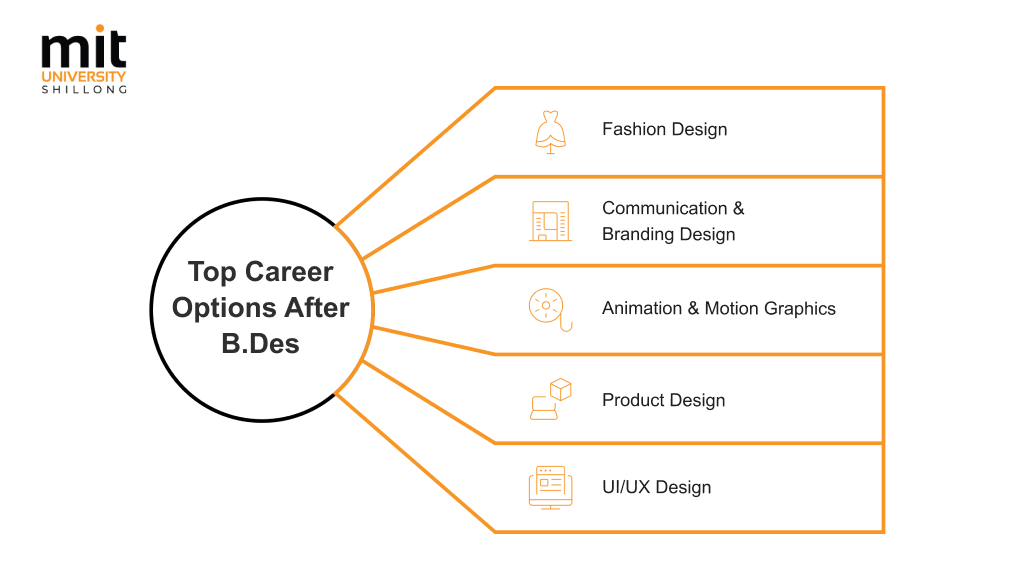
The roles you can chase are varied. A few of the most common:
- B Des fashion design roles, from apparel and textile design to styling and creating your own clothing line
- Communication and branding design for agencies and consumer brands
- Animation and motion graphics for film, gaming and advertising
- B Des product design work, spanning everything from consumer gadgets to furniture and packaging
- UI/UX design for apps, websites and digital platforms
Most graduates try a couple of these before settling into the one that clicks.
Industries Hiring B.Des Graduates
Design has spread into almost every sector: product startups, e-commerce brands, advertising agencies, media houses, gaming studios, manufacturing firms and consultancies. The jobs after B Des are no longer limited to the old ad-agency world; today’s biggest hirers are often product companies that need designers in-house.
At MIT Shillong, our recruiters include names like Lenskart, Zouk, Ola Electric and TCS, which tells you how wide the net has become.
Skills That Make B.Des Graduates Industry-Ready
A degree gets you in the door, but these skills keep you in the room:
- Fluency with tools like Photoshop, Illustrator, Figma and relevant animation software
- A solid grasp of typography, colour and layout
- User research and the ability to design for real people, not just aesthetics
- A habit of finishing live projects, since employers trust a portfolio over a transcript
A well-structured fashion designing college builds most of these into the coursework.
Scope and Salary Trends for B.Design Graphics Graduates
The numbers back up the optimism. India already has over 300,000 designers on freelance platforms alone, and the global graphic design market is projected to reach roughly $78 billion by 2032. Entry-level pay in India starts modestly but climbs quickly once you specialise.
For B Des graphic design graduates specifically, demand has shifted towards product companies and motion-heavy work, both at the higher end of the pay scale. Building a reputable graphic design college in India shortlist early makes a real difference to where you land.
Emerging Career Opportunities for B.Des Graduates
Some of the fastest-growing roles barely existed a decade ago. UX research, motion design, service design and design for AI-driven products all pay well and struggle to find enough qualified people. Around 32% of design job listings now mention AI-related skills, up from just 3% in 2023, so staying current pays off.
Future Scope of B.Des Specializations
Every specialisation has room to grow. Fashion is leaning into sustainability, graphics is merging with motion and UI, product design is expanding into smart devices, and animation is riding the streaming boom. Picking a product design college that keeps its curriculum current keeps your degree relevant. With the festive admission season now, research programmes before the 2026 intake fills up.
Conclusion
A B.Des is less a single career and more a launchpad into dozens of them. Whether you are drawn to fashion, graphics, animation or product design, the demand is real, the pay grows with skill, and the work stays interesting. What matters most is where you train and how much you build while you are there.
Ready to design your future? Explore the B.Des programmes at MIT University Shillong and apply for the 2026 intake today. Chat with our counsellors, book your seat, and take the first step towards a creative career that goes somewhere.
FAQs
What software should a graphic designer learn first?
Start with Canva to build your eye, then move to Photoshop for editing. Add Illustrator next for logos and vector work.
Which is the best graphic design software for beginners?
Canva is the friendliest starting point, thanks to its simple, template-driven interface. It lets you create clean graphics while you learn the fundamentals.
How can I improve my graphic design software skills?
Practise with small weekly projects and copy work you admire. Join design communities for feedback, and master keyboard shortcuts to work faster.
What are te most important tools for graphic designers?
Photoshop, Illustrator, InDesign, and Figma form the essential core. Together, they cover editing, vectors, layout, and interface design for almost any job.
Leave a Reply