

Few artistic paths carry the commercial and cultural impact of the apparel sector. Walking into a design studio means trading casual sketching for technical precision, where a well-measured seam and an innovative silhouette can define global style trends. For students and parents navigating higher education choices, understanding the exact competencies required in this field helps set realistic career expectations. While notable campuses like MIT Shillong provide dedicated learning environments, every aspiring creator needs a clear roadmap of the abilities that separate casual sketchers from working professionals. Let us examine the core competencies every student needs to master through a comprehensive fashion designing course.
Why Skills Matter in a Fashion Designing Course
Mastering technique gives your artistic vision the structural support it needs to survive the real world. The clothing industry relies heavily on precision, timing, and an accurate understanding of textiles. When you enrol in a recognised fashion designing institute in Shillong, you quickly learn that raw talent only takes you so far. Structured training bridges the gap between wild imagination and marketable garments, ensuring you can turn a creative concept into a physical product that fits properly and appeals to buyers. Without a solid educational framework, designers often struggle with the technical realities of scale, fabric behaviour, and industrial production schedules.
Understanding the Fashion Design Process
Every garment you see on a runway or hanging in a retail store starts as a spark of inspiration that goes through a rigorous development pipeline.
- Trend Research: Analysing cultural shifts, historical archives, and consumer data to predict upcoming colour palettes and silhouettes.
- Mood Boarding: Collecting fabric swatches, photographs, and textures to establish a cohesive visual theme for a collection.
- Initial Sketching: Translating abstract ideas into flat drawings and croquis illustrations that show garment lines.
- Pattern Making: Drafting flat paper templates based on body measurements to guide fabric cutting.
- Toile Creation: Sewing a test garment in cheap muslin fabric to check fit, balance, and drape before using expensive materials.
- Final Production: Sourcing the actual textiles, executing precise stitching, and adding hardware or embellishments.
Essential Creative Skills for Fashion Designers
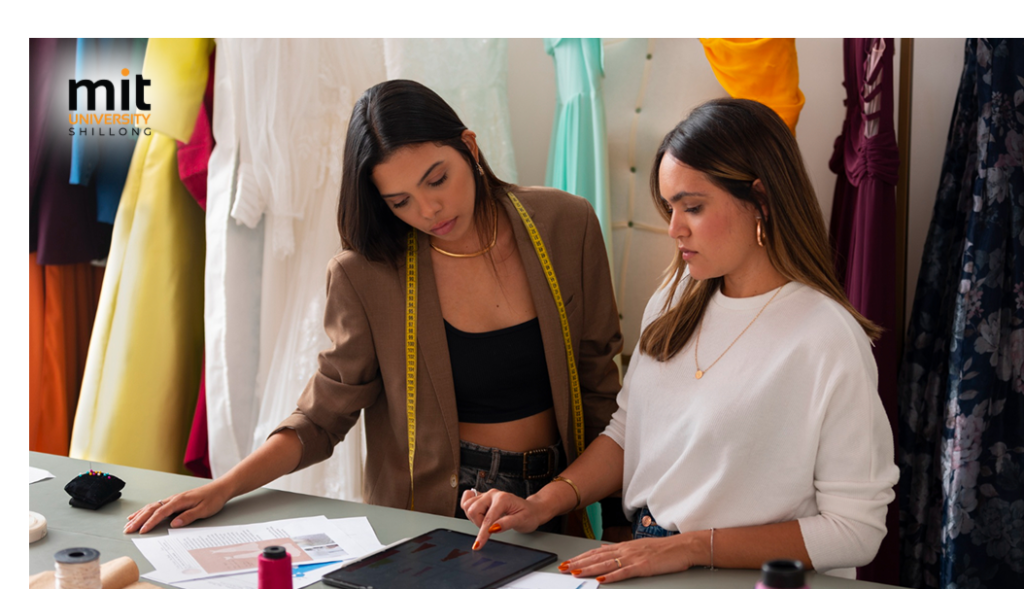
Developing creative fashion design capabilities means training your eye to spot unique combinations of texture, proportion, and colour. You must learn how to manipulate fabrics, experiment with draping directly on a mannequin, and invent novel silhouettes without losing structural integrity. Creativity in this industry is a disciplined muscle that requires daily sketching, continuous visual research, and the courage to discard ideas that do not serve the final garment. Balancing artistic expression with commercial wearability remains one of the hardest lessons for undergraduates to master during their studio hours.
Digital & Technical Skills That Form the Foundation of Fashion Design
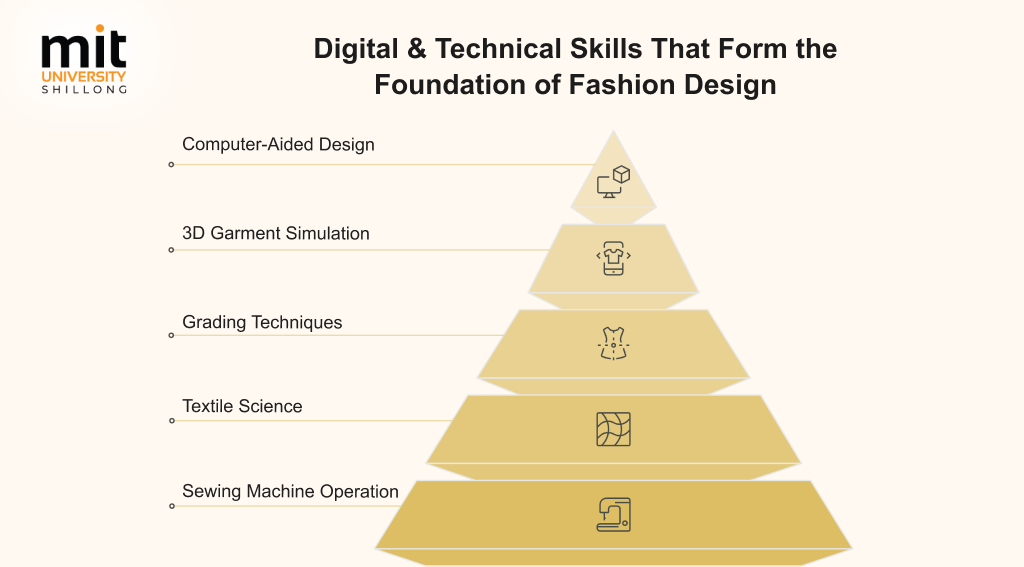
Modern apparel production relies heavily on technology to reduce waste and speed up manufacturing timelines. Understanding these digital tools is non-negotiable for anyone entering the job market.
- Computer-Aided Design: Using software like Adobe Illustrator and Photoshop to create flat sketches, technical flats, and digital prints.
- 3D Garment Simulation: Utilising programmes like CLO 3D to drape fabrics virtually, checking fit and movement before cutting physical cloth.
- Textile Science: Knowing how different weaves, yarn counts, and fibre contents behave under heat, moisture, and tension.
- Sewing Machine Operation: Mastering industrial lockstitch, overlock, and blind hem machines to assemble garments cleanly.
- Grading Techniques: Adjusting master clothing patterns up and down across various commercial sizes accurately.
Business Skills That Turn Designers into Professionals
Understanding the commercial side of apparel manufacturing prevents artists from creating beautiful garments that nobody can afford to produce. You need to grasp cost accounting, supply chain logistics, inventory management, and retail pricing strategies. Knowing how much fabric yields per roll, calculating labour costs per hour, and understanding wholesale versus retail markups ensures that your creative vision remains economically viable in a competitive market. Designers who understand balance sheets and manufacturing budgets are infinitely more employable than those who focus solely on aesthetics.
Soft Skills That Make Fashion Designers Stand Out
Technical execution is vital, but how you interact with colleagues dictates your long-term career trajectory within the industry.
- Active Communication: Explaining your design vision clearly to pattern makers, tailors, and production managers.
- Time Management: Meeting strict deadlines for seasonal collection launches and fashion week presentations.
- Resilience: Accepting constructive criticism from creative directors and buyers without taking adjustments personally.
- Collaboration: Working smoothly alongside merchandisers, marketing teams, and retail buyers to ensure unified brand execution.
- Adaptability: Pivoting quickly when fabric shipments get delayed or client briefs change mid-production.
The table below contrasts the traditional methods of clothing production with modern digital workflows, highlighting why contemporary education must integrate both approaches.
| Production Stage | Traditional Approach | Modern Digital Approach | Skill Required |
| Sketching & Illustration | Hand-drawn croquis and paper mood boards | Vector illustrations and digital rendering | Proficiency in Adobe Illustrator and Photoshop |
| Prototyping & Sampling | Physical muslin toiles and manual fitting adjustments | 3D virtual simulation and digital draping | Knowledge of CLO 3D and digital patternmaking |
| Textile Sourcing | Visiting physical fabric markets and swatching | Global digital textile databases and virtual libraries | Understanding fibre science and material durability |
| Manufacturing Liaison | Paper specification sheets mailed to factories | Cloud-based tech packs and digital supply chains | Clear technical communication and cost accounting |
How to Develop These Skills During a Fashion Designing Course
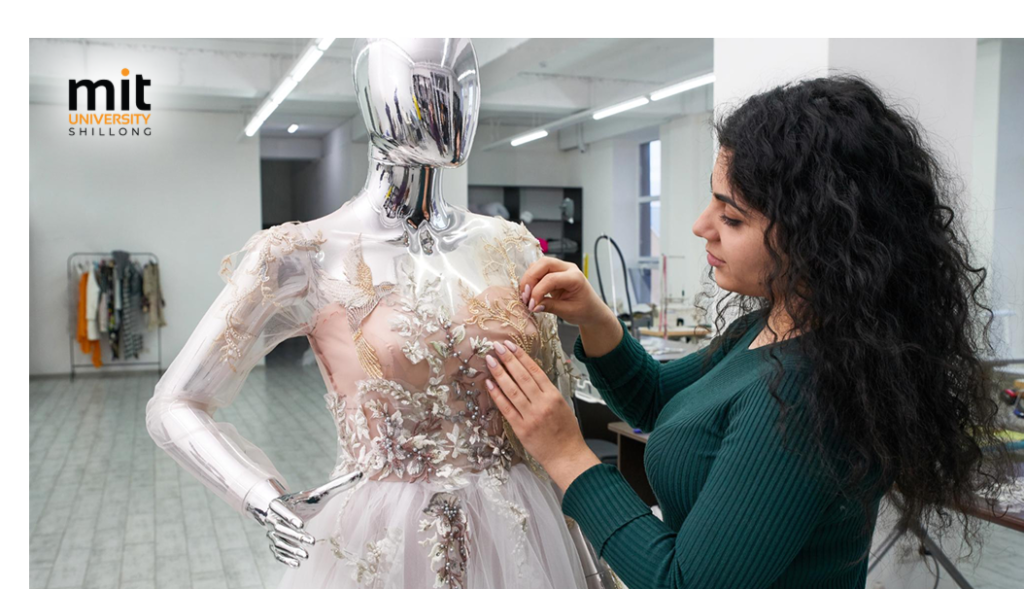
A structured educational programme provides the ideal sandbox for making mistakes safely. Make the most of your studio hours by experimenting with unfamiliar fabrics, volunteering backstage at local fashion shows, and asking professors for honest critiques on your stitching. Pushing past your comfort zone during assignments builds the muscle memory and problem-solving instincts required once you enter professional studios. Attending industry seminars and participating in collegiate design competitions further sharpens your practical abilities and expands your professional outlook.
Building an Impressive Fashion Design Portfolio
Your portfolio acts as your visual resume when applying for jobs or pitching to investors. It should showcase your complete design journey, starting from initial research boards and rough sketches through technical flats and photographs of the finished garments. Employers want to see how your mind solves design problems, so including discarded drafts alongside polished lookbooks demonstrates your genuine creative process. A cluttered or disorganised portfolio can sink an application instantly, making curation just as important as the original artwork.
Skills Employers Look for in Fashion Design Graduates
Hiring managers at major apparel houses look for specific traits when sifting through applications. They value punctuality, attention to detail, a strong grasp of garment construction, and the ability to work under pressure. Familiarity with sustainable design practices and eco-friendly textile sourcing has also become a massive hiring priority across contemporary brands. Showing that you understand zero-waste pattern cutting or biodegradable dyeing techniques gives you a distinct advantage over other applicants.
How to Choose the Right Fashion Designing Course to Build These Skills
Finding the right educational home requires looking closely at faculty backgrounds, workshop facilities, and industry partnerships. If you are exploring a fashion institute in Assam or broader options among regional fashion designing college choices, you must evaluate several critical parameters before committing your time and financial resources. A quality institution provides the necessary infrastructure to turn raw enthusiasm into professional competence.
- Faculty Expertise: Look for instructors who have active industry experience rather than purely academic backgrounds, as they bring real-world production insights directly into the classroom.
- Workshop Infrastructure: Ensure the campus features well-maintained industrial sewing machines, pattern-drafting tables, draping dummies, and modern textile labs.
- Software Access: Check whether computer labs are equipped with up-to-date licences for computer-aided design tools and 3D virtual simulation software.
- Industry Partnerships: Investigate if the institution collaborates with local garment manufacturers, export houses, and retail brands for collaborative projects.
- Internship Integration: Confirm that the curriculum includes mandatory, credit-bearing industrial attachments that allow you to work inside active production studios before graduation.
- Alumni Network: Research where past graduates are currently employed to gauge the true industry reach and reputation of the programme.
Conclusion
Navigating the apparel industry requires patience, technical skill, and a solid educational foundation. Whether you are sketching your first collection or mastering industrial sewing machines, the right training environment makes all the difference. Explore our curriculum, schedule a campus visit, and take the next step toward your creative future at MIT Shillong.
FAQs
How can I improve my creativity as a fashion design student?
Maintain a daily visual diary, experiment with unusual fabric textures, study historical costume archives, and step outside your comfort zone during studio projects.
Which soft skills are essential for success in the fashion industry?
Clear communication, resilience under pressure, effective time management, and collaborative teamwork are crucial for surviving fast-paced studio environments.
How can I stay updated with the latest fashion industry trends?
Follow digital trade publications, analyse international runway shows, study sustainable textile innovations, and observe street style shifts across major cultural hubs.
How important is a fashion design portfolio for getting a job?
Your portfolio is critical because it visually proves your technical skills, creative problem-solving abilities, and garment construction competence to hiring managers