

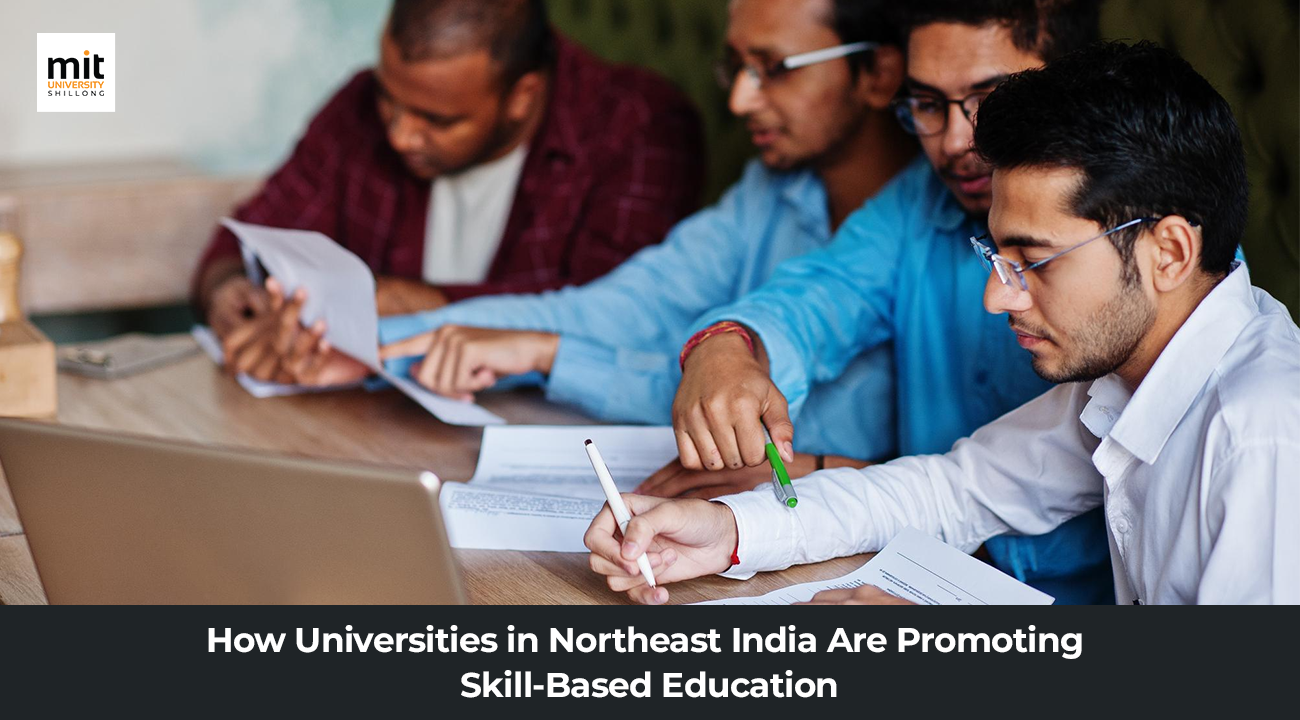
Universities in Northeast India are promoting skill-based education by combining degree programmes with internships, industry exposure, practical training, and career-focused support. This shift has become stronger after NEP 2020 and the National Credit Framework, which support vocational learning, flexible pathways, and credit-based skill integration in higher education.
Students no longer want a course that ends with theory and exams. They want career-ready training. Employers want graduates who can work with tools, communicate clearly, solve problems, and perform in real settings.
That demand is now shaping universities in Northeast India. The region is seeing a stronger push towards applied education, especially in business, healthcare, technology, hospitality, and entrepreneurship. This is also why vocational education in India is now moving closer to mainstream university education.
Why Is Skill-Based Education Important In Higher Education?
Skill-based education improves employability and makes learning more relevant to real jobs. India Skills Report 2025 says 54.81% of Indian graduates are employable, up from 51.2% in 2024. The report is based on more than 6.5 lakh candidates and inputs from 1,000+ corporations across 15 industries.
This is why skill development in higher education is no longer optional. Universities now need to prepare students for the workplace, not only for a final examination.
Skill-based education helps students:
- Build practical knowledge
- Improve communication and workplace readiness
- Prepare for internships and placements
- Explore self-employment and start-up paths
- Connect learning with industry demand
What Role Do Universities Play In Skill Development?
Universities shape career outcomes when they redesign courses around application. The stronger institutions now include:
- project-based learning
- internships and live assignments
- soft-skills and interview training
- mentoring and placement support
- entrepreneurship guidance
- industry sessions and workshops
A 2025 NITI Aayog report notes that NEP 2020 supports integrating vocational education into higher education and encourages flexible curricula linked to employability.
That policy direction is pushing universities to move faster. In the Northeast, this is especially useful because students need both regional relevance and national mobility.
What Skill Programmes Are Growing In Northeast India?
The most visible skill-focused programmes are linked to sectors that can generate jobs and local enterprise. These include:
- Information Technology
- Business And Management
- Healthcare And Allied Services
- Hospitality And Tourism
- Media And Communication
- Entrepreneurship And Start-Up Support
In addition to the core focus areas, universities in the region are launching initiatives that weave together education and local economic opportunities and emerging areas of employment. Information technology and business management continue to attract strong interest as they provide entry points to corporate positions, digital jobs, and self-employment opportunities.
As the demand for trained professionals in the areas of diagnostics, administration, patient support, and community health grows, the Healthcare and allied services fields are also expanding.
In the Northeast, Hospitality, tourism, media, and communication are of similar importance, as the cultural heritage, travel opportunities, and service-oriented businesses provide streamlined employment opportunities to students.
How Do Industry Collaboration And Training Improve Student Outcomes?
Skill-based education works better when universities stay connected to employers. Industry collaboration gives students practical exposure and clearer job expectations.
The Ministry of Skill Development and Entrepreneurship said in its 2025 year-end review that India had 14,682 ITIs and over 14 lakh trainees enrolled by 2025. The same update highlights employer-linked training models such as dual training and Flexi MoUs.
This larger national push is influencing higher education too. Universities that work with industry can offer:
- internships
- practical workshops
- guest lectures
- placement preparation
- real project exposure
For students comparing MIT University Shillong or MIT college Meghalaya, this is one of the most useful checkpoints.
What Are The Benefits Of Skill-Based Education For Students?
Students gain more than a degree. They graduate with stronger career preparation, sharper workplace skills, and better exposure to real industry expectations.
| Area | Traditional Model | Skill-Based Model |
| Learning Style | Theory-led | Practical plus theory |
| Career Preparation | Starts late | Starts early |
| Industry Exposure | Limited | Built into the course |
| Interview Readiness | Lower | Stronger |
| Career Options | Narrow | Broader |
At MIT University Meghalaya, we assist students via internships, workshops and recruitment activities, mentoring, incubation and industry interaction. This enables students to develop practical skills along with their academic learning.
What Challenges And Opportunities Exist In Skill-Based Education?
Some universities continue to have legacy curriculum, inadequate laboratory facilities and poor employer connection. Faculty development remains a perennial problem.
The opportunity, however, is evident. Universities that integrate their curriculum with employment opportunities will draw students that are looking for practical learning and better career prospects. This is a considerable opportunity for universities in Northeast India that want to differentiate themselves through industry-integrated and student-centric education.
Conclusion: What Should Students Look For In A Skill-Focused University?
At MIT University Meghalaya, we focus on building that balance through academic learning, industry engagement, internships, mentoring, and entrepreneurship support.
For students looking at universities situated in Northeast India, choosing a university that enables them to acquire competencies, gain self-assurance, and advance towards tangible employment opportunities should be a priority.
FAQs
What courses focus on skill development?
Courses in business, IT, healthcare, hospitality, media, and entrepreneurship usually include stronger practical components, internships, and applied training.
How does skill-based education improve jobs?
It improves job readiness by helping students build practical ability, communication skills, and workplace exposure before graduation.
Do universities partner with industries for training?
Yes. Many universities now work with industry for internships, workshops, guest sessions, live projects, and placement preparation.
What are the benefits of skill-based education?
It improves employability, interview readiness, confidence, practical learning, and career flexibility.
How does it help students’ careers?
It helps students move faster into jobs, internships, start-up paths, and industry roles because they graduate with stronger applied skills.