


Introduction
Finance is at the heart of every successful business. Whether it’s managing investments, budgeting, or risk assessment, companies rely on skilled finance professionals to guide decisions. That’s why many graduates choose to pursue an MBA in Finance subjects. But before enrolling, students often ask: “What is taught in MBA Finance?” This blog breaks down the MBA Finance syllabus, subjects, and learning components so you know exactly what to expect. Let’s dive in.
Core Foundation in Business Management
Like all MBA programs, Finance students first build a strong foundation in management principles. Some of the core subjects include:
- Organizational Behaviour
- Business Economics
- Principles of Management
- Marketing and HR Basics
- Business Communication
This foundation ensures that students understand the bigger picture of how businesses function before diving into financial specialization.
Core Finance Subjects in MBA

The MBA Finance syllabus is designed to provide technical depth in finance. Here are in MBA finance course details:
- Financial Accounting & Analysis – understanding balance sheets, income statements, and cash flows.
- Corporate Finance – evaluating investment opportunities and capital structures.
- Investment Management – learning about stocks, bonds, and portfolio strategies.
- Risk Management & Insurance – methods to identify and mitigate business risks.
- International Finance – handling cross-border financial operations.
If you’ve ever wondered “what is included in the MBA Finance syllabus?”—these are the backbone subjects that define the specialization.
Advanced & Elective Finance Modules
As you progress, the course allows you to specialize further through electives such as:
- Financial Derivatives
- Mergers & Acquisitions
- Wealth and Asset Management
- Behavioural Finance
- Fintech and Digital Payments
These modules help students align their learning with industry trends, making them job-ready for modern financial roles.
Practical Learning Components

Beyond theory, MBA Finance programs emphasize real-world exposure. Students participate in:
- Case studies of companies and market scenarios.
- Internships with banks, investment firms, or corporations.
- Workshops and simulations to apply finance models.
- Capstone projects that integrate classroom knowledge with industry practices.
According to the All India Council for Technical Education (AICTE), experiential learning is now a mandatory part of MBA curricula, ensuring students are prepared for practical business challenges.
Skills You Gain from MBA Finance
The program equips students with both hard and soft skills, such as:
- Financial analysis and modeling
- Strategic decision-making
- Risk evaluation
- Negotiation and leadership
- Communication and problem-solving
These skills make MBA Finance graduates versatile across industries, from banking and IT to consulting and fintech.
Career Pathways After MBA Finance
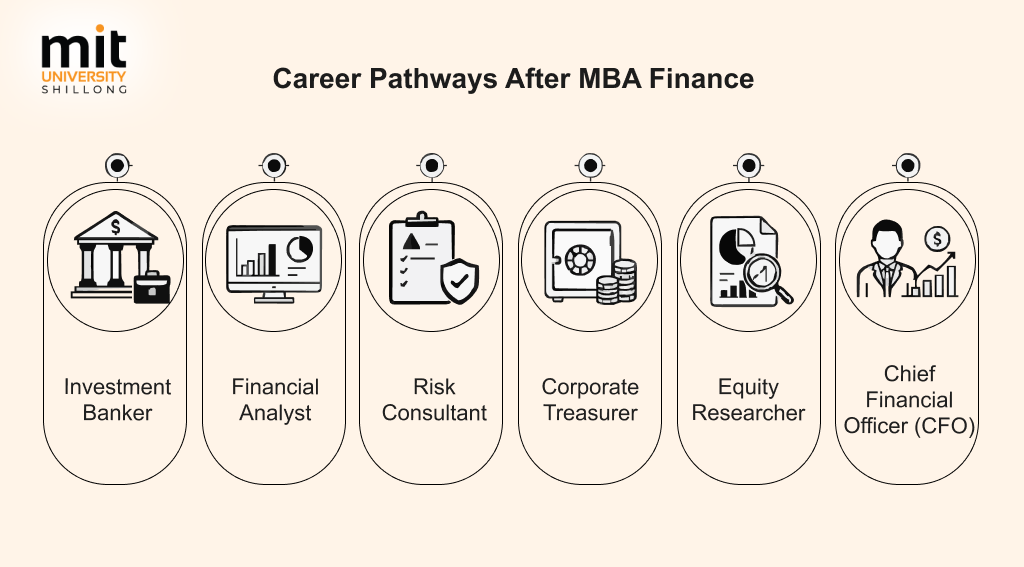
Completing MBA Finance opens doors to a variety of roles, including:
- Investment Banker
- Financial Analyst
- Risk Consultant
- Corporate Treasurer
- Equity Researcher
- Chief Financial Officer (CFO)
Institutes such as MBA in financial management colleges in Shillong and top MBA colleges in Meghalaya offer placements with leading banks, consulting firms, and multinational companies. Students also find opportunities in government roles, thanks to their strong understanding of economics and finance.
Conclusion
So, is MBA Finance tough? It can be challenging due to its quantitative nature, but with the right mindset and consistent practice, it’s highly rewarding. If you’re passionate about numbers, business strategy, and long-term financial growth, an MBA in Finance could be the perfect fit. Choosing from reputed institutes—like the best colleges for MBA in HR and Finance—can further enhance your career prospects.
FAQs
What subjects are taught in MBA Finance?
MBA Finance covers accounting, corporate finance, investment management, risk management, and electives like fintech and derivatives.
Is MBA Finance tough?
It is rigorous, especially in mathematics and analytics, but consistent practice makes it manageable.
Which is better: an MBA in Finance or an MBA in Marketing?
MBA Finance is better for students interested in numbers and strategy, while Marketing suits those inclined toward branding and consumer behavior.