

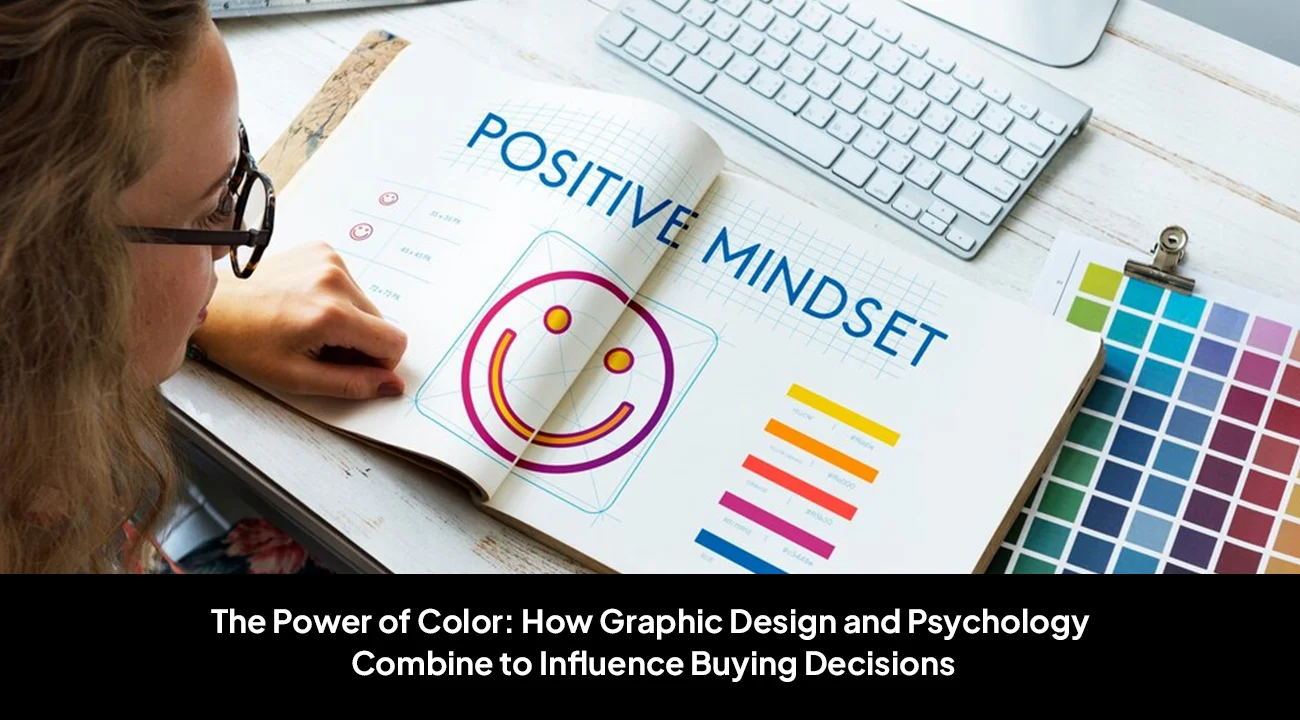
Have you ever wondered why certain websites or advertisements instantly grab your attention? The secret often lies in the clever use of colours. The psychology of colour in design is a powerful tool that graphic designers and marketers use to influence emotions and drive consumer behavior. In this article, we’ll explore how colour psychology in branding and graphic design work together to shape buying decisions.
Colour is often the first thing a consumer notices when reading a banner or social media post. They notice it even before reading a brand name or message.
This is because colour plays a powerful psychological role in shaping perception. Moreover, purchasing decisions are frequently emotional rather than purely logical.
That’s why graphic designers understand that visual identity influences trust, recall, and brand preference. Hence, colour selection is never accidental. Let’s learn more about the graphic design industry.
How Is the Graphic Design Industry Growing in India?
The demand for visual content is increasing as businesses move towards digital platforms. In fact, India’s digital advertising sector crossed Rs. 1,00,000 crore in value. In this, digital media accounted for nearly 46% of total advertising expenditure in FY25. As brands compete for attention online, visual design has become central to marketing strategy.
Government initiatives supporting digital innovation and creative industries have further encouraged growth in the media and design ecosystem. As a result, skilled graphic designers are increasingly required across sectors.
Key Forces Behind the Expansion of Digital Design
- Rising digital advertising expenditure
- Increased screen time among consumers
- Expansion of e-commerce platforms
- Growing demand for brand differentiation
As competition is high, design precision now directly impacts revenue outcomes.
The Psychology of Color
Colour is more than just a visual element—it’s a psychological trigger influencing how we perceive brands and products. For instance:
- Red is often associated with urgency and excitement, making it ideal for sales and promotions.
- Blue conveys trust and professionalism, making it a popular choice for financial and healthcare industries.
- Green represents growth, health, and sustainability, appealing to eco-conscious consumers.
Understanding how colour affects consumer decisions can help brands convey their message effectively and connect with their target audience.
The Role of Graphic Design in Marketing
Graphic design acts as the bridge between a brand’s message and its audience. Whether it’s a logo, website, or advertisement, design elements like typography, layout, and colour palette play a pivotal role in shaping consumer perceptions.
Designers at top institutions like MIT Institute of Design or b.des graphic design colleges in Shillong are trained to use these elements strategically to enhance a brand’s visual identity. For example, the right combination of colours can evoke emotions that align with a brand’s values, encouraging customer loyalty and trust.
Combining Color Psychology and Graphic Design
When colour psychology in web design meets effective graphic design, the results can be transformative. Here’s how the two work hand-in-hand:
- Creating Visual Harmony: Designers use complementary colours to create visually appealing layouts that draw attention without overwhelming the viewer.
- Highlighting Key Elements: Colours are used strategically to guide the user’s eye to important elements like call-to-action buttons or special offers.
- Building Brand Recognition: Consistent use of colours across a brand’s materials strengthens its identity and makes it easily recognisable.
For instance, Coca-Cola’s iconic red is synonymous with energy and passion, while Apple’s minimalist use of white and grey conveys sophistication and innovation.
Case Studies and Examples
- McDonald’s: The use of red and yellow in McDonald’s branding isn’t accidental. Red stimulates appetite, while yellow evokes happiness, making it an effective combination for a fast-food chain.
- Spotify: Spotify’s green logo represents growth and creativity, resonating with its innovative approach to music streaming.
- Amazon: Amazon’s orange arrow conveys friendliness and energy, subtly encouraging users to explore and shop.
Such examples illustrate the seamless integration of colour psychology in branding and design to influence consumer behaviour.
Why Does Colour Matter in Branding and Identity?
Colour shapes first impressions within seconds. Studies in consumer psychology suggest that individuals form subconscious opinions about products almost immediately. During this, colour contributes significantly to those judgments.
That’s why brands use colour to communicate personality, values, and positioning without using words.
For example:
- Blue often conveys trust and reliability
- Red suggests urgency and excitement
- Green is associated with growth and sustainability
How Colour Influences Perception
| Colour | Common Psychological Association |
| Blue | Trust and stability |
| Red | Energy and urgency |
| Yellow | Optimism and attention |
| Green | Health and balance |
When colour aligns with the brand message, recognition and loyalty improve. When it doesn’t, it can lead to poor consequences.
What Mistakes Do Brands Make When Using Colour in Marketing?
While colour is powerful, incorrect usage can weaken brand perception. Many businesses choose colours based on preference rather than strategy. This approach often leads to inconsistencies across platforms.
Common mistakes include:
- Overusing bright colours without balance
- Ignoring cultural context in colour meaning
- Failing to maintain consistency in the brand palette
- Using low contrast combinations that reduce readability
Apart from avoiding mistakes, businesses need to keep up with the ever-changing industry trends.
How Is Colour Psychology Evolving in Digital Marketing?
Digital environments require responsive and accessible design. As mobile usage increases, colour contrast and visibility are critical to the user experience. Designers now test palettes across devices to ensure clarity in different lighting conditions.
Artificial intelligence tools are also being used to analyse user responses to colour patterns. This integration of data and design allows brands to optimise campaigns more effectively.
Emerging Trends in Colour Strategy
| Trend | Impact on Marketing |
| Personalised colour themes | Improved user engagement |
| Data-driven design testing | Better conversion rates |
| Accessibility-focused palettes | Wider audience reach |
Because technology influences perception patterns, colour strategy continues to evolve alongside digital transformation.
Final Thought On Why Does Colour Remain Central to Buying Decisions?
Colour influences emotion before logic enters the process. When used strategically, it strengthens identity and guides consumer behaviour.
As digital competition intensifies, the connection between psychology and graphic design becomes even more important. Brands that understand this relationship position themselves more effectively in a crowded marketplace.
FAQs
Why is colour selection important in graphic design projects?
Colour shapes first impressions and influences emotional responses, which in turn affect buying decisions.
How can graphic designers use colour to influence consumer emotions?
Designers select colours aligned with psychological associations and brand positioning.
What role does colour harmony play in professional graphic design?
Harmony ensures visual balance, which improves readability and brand perception.
How can colour improve visual hierarchy in graphic design?
Strategic contrast directs attention to key elements and calls to action.
Conclusion
The psychology of color in design is a fascinating field that blends art and science. By understanding the emotional and psychological impact of colours, designers and marketers can craft visuals that resonate deeply with audiences.
If you’re passionate about exploring the intersection of design and psychology, consider pursuing a degree at top institutions like MIT Institute of Design or B.DES graphic design colleges in Shillong.