


Introduction
Applying for an MBA is an important step for many students, and it requires careful planning. Even small errors in the MBA application process can reduce a student’s chances of getting selected. Here, this blog explains the most common MBA application mistakes and the best ways to avoid them. It also highlights how soft skills education, soft skills training, and soft skills for students have become essential in MBA admissions today.
Table of Contents
- Getting Started
- Understanding the MBA Admissions Process
- Most Common MBA Application Mistakes and How to Avoid Them
- Unclear Career Goals
- Generic or Overused Statements
- Weak Statement of Purpose (SOP) or Essay
- Ignoring Programme Fit
- Inadequate Work Experience Presentation
- Overlooking Extracurricular Activities and Soft Skills
- Submitting an Error-Filled Application
- Not Preparing for the MBA Interview
- Applying Late in the Admission Cycle
- Unclear Career Goals
- How MIT University Shillong Prepares Students for Competitive MBA Admissions
- Bonus Tips to Strengthen an MBA Application
- Conclusion
- FAQs
Getting Started
MBA admissions today are not only based on marks or exam scores. Business schools also check clarity, personality, communication, and overall potential. A Study shows that nearly 89% of recruiters consider soft skills more important than technical skills for leadership roles. This makes soft skills education and soft skills training an important part of MBA application tips globally.
Understanding the MBA Admissions Process
Most MBA programmes follow these steps:
- Entrance exam
- Submission of the application form
- SOP or personal essay
- Interview or group discussion
- Final decision
According to a GMAC report, around 30% of applications are rejected because students fail to present their goals clearly or do not follow instructions properly. Understanding each step helps avoid unnecessary mistakes, plus clarifies how to apply for an MBA for students.
Most Common MBA Application Mistakes and How to Avoid Them

1. Why are unclear career goals a big problem?
Well, business schools want to understand what a student plans to do after the MBA. Many applicants write very general goals such as “I want to become successful in management.” Such statements do not show clarity or seriousness.
How to avoid this mistake:
- Mention one clear short-term goal.
- Mention one realistic long-term goal.
- Connect both goals with the MBA programme being chosen.
Clear goals help the admission committee see the purpose behind the application.
2. Why are generic or overused statements harmful?
Admission teams read thousands of applications every year. Sentences like “I am very passionate about management” or “I want to be a leader” sound repetitive.
Better approach:
- Share specific examples.
- Describe real achievements.
- Mention experiences that shaped the student’s interest in management.
Insights from GMAT Club show that originality greatly improves the chances of acceptance.
3. What makes an SOP or essay weak?
A weak SOP is usually too vague, too long, or copied from online samples.
A strong SOP generally:
- Explains the student’s background.
- Shares real motivation.
- Connects past experiences with future goals.
- Shows how the MBA will support growth.
Moreover, a study revealed that nearly 40% of rejected applications had unclear or poorly structured essays.
4. Why does ignoring the programme fit hurt the application?
Every MBA programme has its own focus areas. Some are known for marketing, others for finance or entrepreneurship. If the applicant’s goals do not align with the programme’s strengths, the application may not stand out.
Students should:
- Check curriculum details.
- Understand the teaching style.
- Research the faculty.
- Compare programme benefits with their own goals.
This step is especially important when applying to the top colleges for MBA in marketing in Shillong or the best MBA colleges in Shillong.
5. Why is presenting work experience properly important?
Many students only mention job titles without explaining responsibilities or achievements. Even limited work experience can become strong if presented correctly.
Better work experience presentation includes:
- Clear responsibilities.
- Achievements with numbers.
- Leadership or teamwork examples.
This helps the admission panel understand the applicant’s actual contribution.
6. Why should extracurricular activities and soft skills not be ignored?
MBA programmes expect students to work in teams, manage pressure, and communicate effectively. This comes from soft skills education, soft skills training, and active participation in extracurricular activities.
Plus, with strong soft skills, students perform 12–20% better in interviews and group discussions.
Useful extracurriculars include:
- Sports activities.
- School and college clubs.
- Social work or volunteering.
- Event organising.
- Short-term certificates.
7. Why is submitting an error-filled application risky?
Spelling mistakes, incomplete information, or wrong details show carelessness. Admission teams prefer students who pay attention to detail.
How to avoid this:
- Read the form twice.
- Ask a senior, teacher, or friend to review.
- Use correct information everywhere.
Accuracy builds trust with the admission team.
8. Why is interview preparation important?
The interview is a major part of the MBA application process. It checks confidence, communication, clarity of goals, and overall presence.
Common interview questions include:
- Why do you want to pursue an MBA?
- What is your biggest weakness?
- Where do you see yourself in five years?
Mock interviews help students perform better.
9. Why should students avoid applying late?
Many universities fill seats early. Late applications reduce the chances of selection, even for strong candidates.
Best tip: Always apply in the first or second round.
How MIT University Shillong Prepares Students for Competitive MBA Admissions
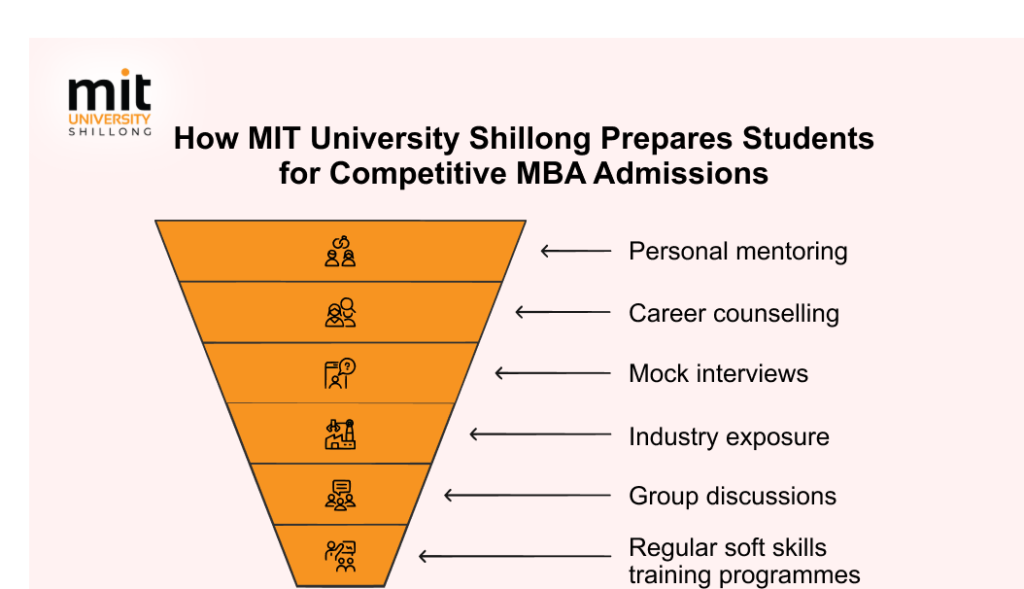
MIT University Shillong is known as one of the best colleges in Meghalaya and also among the best colleges in Shillong. The university focuses on complete development through:
- Personal mentoring.
- Career counselling.
- Mock interviews.
- Industry exposure.
- Group discussions.
- Regular soft skills training programmes.
Its supportive environment helps students build confidence and prepare for competitive MBA admissions.
Bonus Tips to Strengthen an MBA Application
- Highlight achievements properly.
- Add certificates in communication or management.
- Improve confidence through soft skills education.
- Write goals clearly and realistically.
- Keep the CV clean and updated.
- Stay disciplined and positive.
Conclusion
Understanding the most common MBA application mistakes and learning how to avoid them can make the application so much better and stronger. With clear goals, a focused SOP, good communication, and the help of soft skills for students, anyone can improve their chances of getting into MIT University Shillong or other leading universities. Proper preparation always brings better results.
FAQs
1. Do students need a perfect academic record to get into a good MBA programme?
No, most colleges check overall potential and not just marks.
2. How important is work experience in an MBA application?
Helpful but not compulsory. Freshers can also apply.
3. What is your biggest weakness in an MBA interview?
A common approach is to mention a real weakness that does not affect core MBA skills and show improvement.
4. Can students apply to more than one MBA programme at the same university?
Yes, but check the university guidelines first. For more details, visit the MIT University Shillong website.