


Why are employers in India hiring coders who understand history or business grads who studied psychology? Because the most valued professionals today are not just tech-savvy, they’re also problem-solvers, creative thinkers, and effective communicators. That’s where interdisciplinary learning comes in.
This kind of learning is valued across industries. Companies want people who can work across functions, connect ideas, and navigate complexity. For example, startups look for designers who understand product-market fit as well as user psychology. Even public sector roles are evolving to require both domain expertise and social understanding.
As a result, colleges across India are updating their programmes. You’ll now find courses where students study coding alongside ethics, economics with behavioural science, or design with management.
This shift is preparing a new generation to lead with both technical skill and human insight, and that begins with how they learn. So, what exactly does this kind of learning look like in practice?
What Is Interdisciplinary Learning?

Interdisciplinary learning brings together knowledge from different fields. It allows students to combine technical subjects with human‑centred areas such as psychology, communication, design, ethics, and social sciences.
Across India, institutions shaped by the National Education Policy (NEP 2020), including the best college in Meghalaya, are expanding such offerings to help students build flexible skill sets and confidence across varied domains. These courses are becoming popular because companies want graduates who can solve problems from multiple angles.
Why Employers Value Tech + Humanities Skills
Content Structure:
- Top Section: “What Employers Want in 2025”
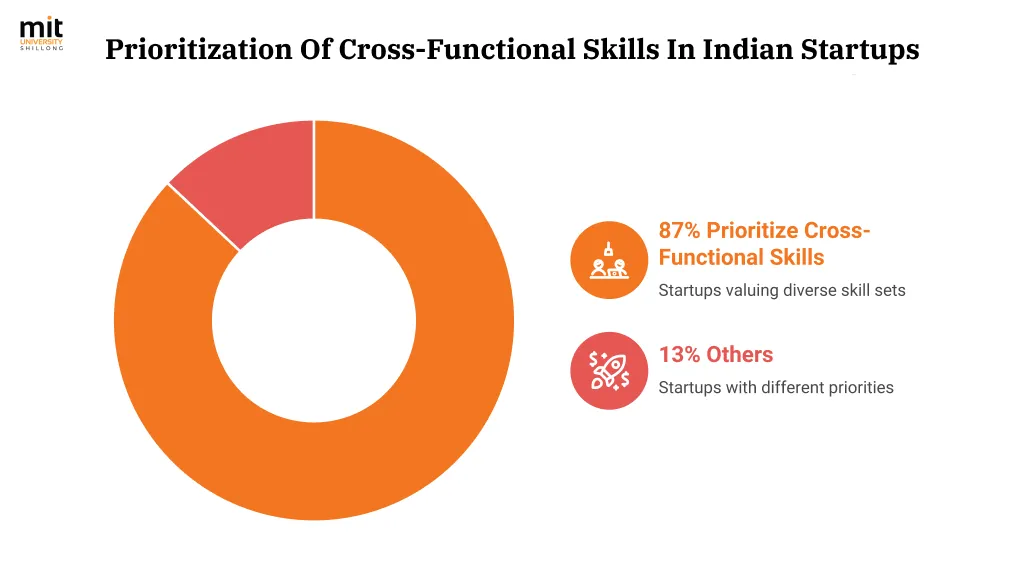
- Stat: 87% of Indian startups prioritize cross-functional skills
- Stat: 3x higher innovation rates in interdisciplinary teams
- Middle Section: “The Skills Matrix”
- Left column: Traditional tech skills (coding, data analysis, systems design)
- Right column: Humanities skills (communication, ethics, user empathy)
- Center: Combined outcomes (better products, ethical AI, user-focused solutions)
- Bottom Section: “Career Impact”
- Average salary premium: 25-40% higher for interdisciplinary graduates
- Time to promotion: 30% faster career advancement
Visual Style: Use MIT University brand colors with modern flat design, incorporating icons and minimal text
Employers now look for people who can use technology well but can also understand users, teams, and society.
For example:
- A data analyst who explains insights clearly becomes more valuable.
- A designer who understands coding delivers solutions faster.
- A product manager with empathy creates better user‑focused outcomes.
Startups especially prefer individuals who can work across functions without being confined to a single role. Tech companies worldwide have reported better innovation when teams include members with both technical and humanities backgrounds. This shift continues to grow in India as well.
Benefits for Students

Students studying through cross-disciplinary programmes gain:
- Strong critical thinking abilities
- Better adaptability during internships and campus placements
- Leadership qualities that help them coordinate across teams
- A design‑oriented mindset for approaching real problems
These are the qualities that employers repeatedly list as top preferences during hiring. The interdisciplinary degree benefits are visible in how these students perform in interviews, collaboration tasks, and innovation‑focused roles.

What are The Academic Pathways & Courses?
Content Structure:
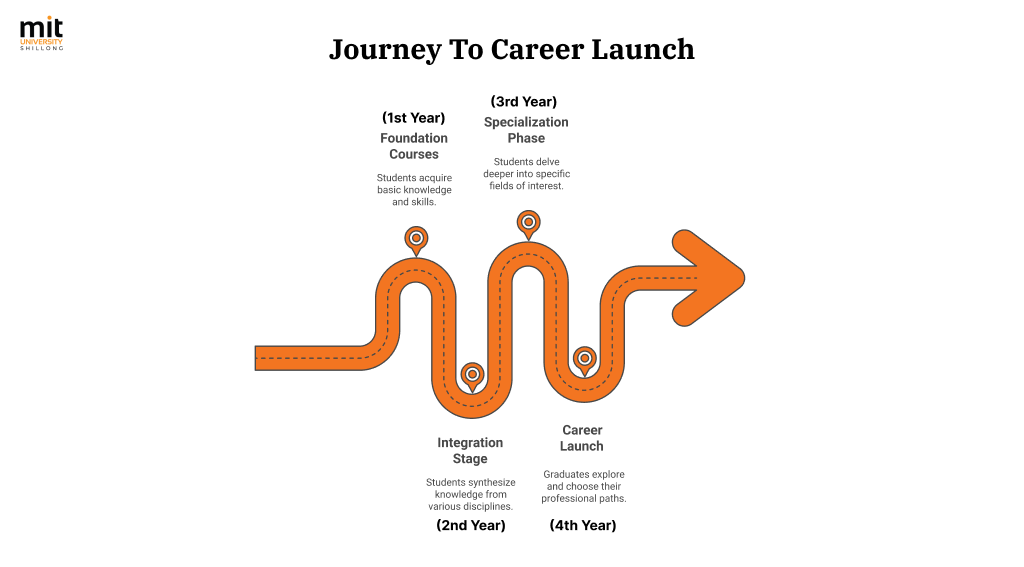
- Stage 1 – Foundation: Year 1-2 core courses (tech fundamentals + humanities basics)
- Stage 2 – Integration: Year 2-3 combined projects and electives
- Stage 3 – Specialization: Year 3-4 capstone projects and internships
- Stage 4 – Career Launch: Multiple career pathway branches showing different roles
Visual Elements:
- Student silhouettes progressing through stages
- Subject icons (code brackets, psychology symbols, design tools)
- Real career outcome percentages from MIT University data
Many universities in India now offer combinations such as B.Tech with liberal arts components, Human‑Centred Computing pathways, Design and Management hybrids, and several models that mix sociology, media, business, and emerging technologies. Students seeking traditional routes are now also looking at programmes that offer both technical and human‑centred growth.
Courses that combine technology with the humanities are gaining attention steadily. An example of this is the tech and humanities course, where students learn coding, psychology, ethics, communication, design fundamentals, and analytical reasoning in the same programme. These pathways prepare learners for diverse fields like UX research, product development, social technology initiatives, digital policy, and ethical innovation.
Students who prefer broader city environments also explore options in the north‑east, including the best college in Shillong, especially for those seeking creativity‑driven, innovation‑led environments.

Which Careers Can Students Explore?
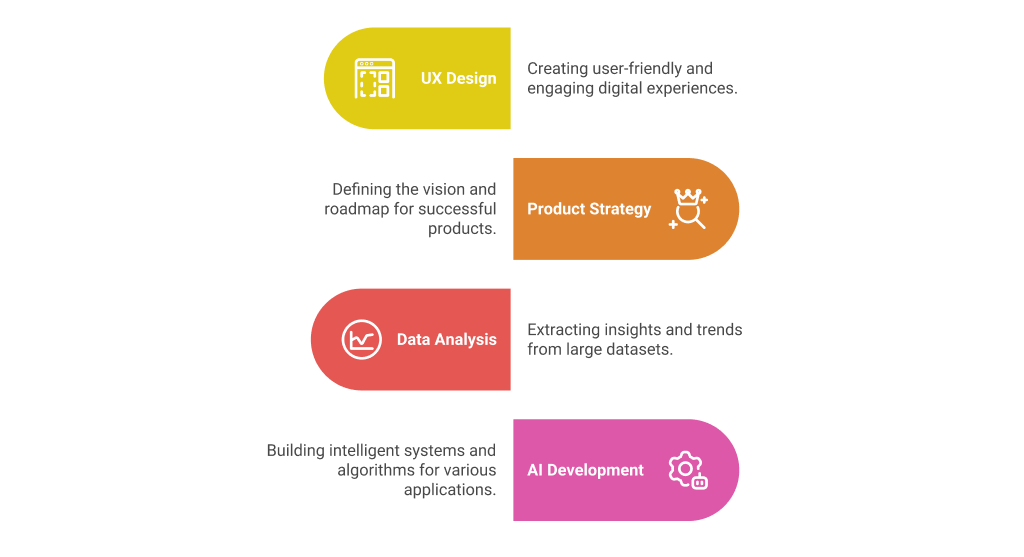
With an interdisciplinary foundation, students can enter roles such as:
- Product strategy
- UX research and design
- Data communication and insights
- Digital policy
- Human‑centred AI development
- Research and innovation units
- Social impact and community technology roles
These roles suit students who work well across departments and can combine reasoning, empathy, and analytical skills.

Lead the Future with Skills That Connect Disciplines
Workplaces now value professionals who blend technology with human understanding. If your goal is to build a career that is flexible, creative, and future‑ready, then interdisciplinary learning gives you a strong foundation.
Institutions like MIT University India offer programmes designed to build this balance of analytical and creative learning. Their approach prepares students for evolving industries and helps them succeed in careers that require both depth in technology and an understanding of people.
