


Introduction
Building a strong design portfolio is one of the most important steps for students pursuing creative careers. While academic qualifications like a Bachelor of Design course in Meghalaya are essential, employers and clients often focus more on what students can create and showcase. A student design portfolio helps highlight skills, creativity, and problem-solving ability in real-world projects.
For students in Meghalaya, creating an impressive graphic design portfolio or UI UX design portfolio can open doors locally and globally. Even without moving to big cities, students can build a portfolio that competes with top designers worldwide.
This guide will explain how to build a design portfolio step by step, with practical tips, examples, and strategies, and show how institutions like MIT University, Shillong su pport students in developing a strong portfolio for design students.
Table of Contents
- Why Your Design Portfolio Matters More Than Your Degree
- Understanding What Makes a ‘Killer’ Design Portfolio
- Step-by-Step Guide to Building an Outstanding Design Portfolio in Meghalaya
- Start Early – Use College Projects as Portfolio Core
- Choose Your Niche (Even if You’re Still Exploring)
- Create Personal Projects Beyond Classroom Work
- Collaborate with Local Businesses and Start-Ups
- Take Part in Design Competitions and Hackathons
- Build a Strong Case Study Structure
- Learn Essential Portfolio Tools & Software
- Build Your Online Presence
- Start Early – Use College Projects as Portfolio Core
- How MIT Shillong Supports Portfolio Development for Design Students in Meghalaya
- Common Portfolio Mistakes Students Should Avoid
- Conclusion
- FAQs
Why Your Design Portfolio Matters More Than Your Degree

Employers value what students can create more than the degree they hold. A design portfolio showcases practical skills, creativity, and problem-solving in real-life projects.
Key Reasons to Focus on a Strong Portfolio:
- Demonstrates Skills Clearly: A degree shows knowledge, but a portfolio proves what students can do.
- Highlights Creativity: Creative projects reflect innovation and design thinking.
- Builds Professional Identity: A portfolio is like a personal brand for students and design portfolio creators.
- Improves Employability: According to a 2023 Adobe survey, 76% of design recruiters prefer portfolios over CVs when hiring.
Real-World Example:
A student in Shillong who graduated with a B.Des degree but had no student design portfolio struggled to find internships. Meanwhile, a second-year student with a small but curated portfolio of personal projects and local collaborations secured freelance projects for online clients and even a remote internship with a start-up in Bangalore.
In short, a graphic design portfolio or UI UX design portfolio can sometimes matter more than the final grade in class. It is the first impression a recruiter or client gets.
Understanding What Makes a ‘Killer’ Design Portfolio
A killer portfolio balances creativity, clarity, and relevance. It should showcase diverse projects, personal style, and problem-solving skills.
Elements of a Successful Design Portfolio:
- Clarity: Projects are well-explained with context, objectives, and solutions.
- Diversity: Includes different types of projects like UI design, graphic design, branding, animation, etc.
- Case Studies: Show the thought process behind each design.
- Visual Appeal: Strong layout, colour use, and typography.
- Professionalism: Neat presentation, correct spelling, and high-quality visuals.
Moreover, according to a 2022 study by AIGA (American Institute of Graphic Arts), portfolios with detailed case studies and problem-solving explanations receive 85% higher engagement from potential employers.
Example of a Killer Portfolio Layout:
- Homepage: Attractive hero image, brief introduction, links to projects.
- Project Pages: Each project with problem, solution, process, and visuals.
- Contact Page: Simple contact form, social links, and resume download.
By carefully organising content and visuals, students can make their student design portfolio easy to navigate and impactful.
Step-by-Step Guide to Building an Outstanding Design Portfolio in Meghalaya
1. Start Early – Use College Projects as Portfolio Core
It’s great if you start collecting work from day one. College projects provide the foundation for a student’s design portfolio.
Tips:
- Keep all assignments, sketches, and presentations.
- Choose the best work for inclusion.
- Highlight projects with real-world applications.
- Revise and polish older projects to match professional standards.
Even basic exercises can be transformed into professional-looking portfolio entries with proper editing, captions, and explanations.
2. Choose Your Niche
Students should focus on one or two areas of design to show depth of expertise.
Popular Niche Options:
- Graphic Design: Posters, branding, advertisements
- UI/UX Design: Mobile apps, websites, dashboards
- Illustration & Animation: Character design, motion graphics
Why Choosing a Niche Matters
Well, focusing on a niche allows students to develop greater skills, build a coherent portfolio theme, and attract recruiters looking for specialised talent. Even students in Meghalaya exploring a B.Des UX design college in Shillong can gain expertise while keeping projects aligned with a chosen niche.
3. Create Personal Projects Beyond Classroom Work
Personal projects demonstrate passion and initiative beyond academic requirements.
Ideas for Personal Projects:
- Redesign local business logos
- Create concept apps or websites.
- Develop posters for social awareness campaigns.
- Explore digital art or illustration.
- Work on environmental design or local tourism promotion
Example:
A design student in Shillong created a personal project redesigning Meghalaya’s tourism website, showcasing modern UI and interactive maps. This project not only enhanced the UI UX design portfolio but also got shared by a local travel blog, gaining visibility.
These personal projects show creativity and willingness to experiment, which is crucial for building a standout graphic design portfolio.
4. Collaborate with Local Businesses and Start-Ups
Real-world collaboration adds credibility and relevance to a portfolio.
How to Collaborate:
- Offer design services for cafes, NGOs, or online stores
- Participate in community design initiatives.
- Intern with startups in Shillong or other Meghalaya towns
- Work with local schools for branding and posters.
Collaboration teaches students how to handle client expectations, deadlines, and feedback, key soft skills for students in creative fields.
Mini Case Study:
A student partnered with a local eco-friendly café to create a logo and menu design. The project was added to the graphic design portfolio and received attention on social media, helping the student gain freelance clients.
5. Take Part in Design Competitions and Hackathons

Competitions show initiative and problem-solving ability.
Benefits:
- Adds award-winning projects to your portfolio
- Networking with peers and professionals
- Feedback from judges helps improve design skills.
Students in Meghalaya can participate in:
- Adobe Creative Jam
- Behance Student Competitions
- Local university hackathons and design fests
Competitions demonstrate a student’s ability to work under pressure and innovate, strengthening the UI UX design portfolio.
6. Build a Strong Case Study Structure
Case studies show the reasoning behind designs and are essential for professional portfolios.
Steps to Build Case Studies:
- Project Brief: Explain the problem or goal.
- Research: Show how research-informed design decisions are.
- Design Process: Share sketches, wireframes, and iterations.
- Final Solution: Highlight the finished product with visuals.
- Impact: Include results, feedback, or improvements made.
Tip: Even a simple school project can become a strong case study if the design process and thinking are clearly explained.
7. Learn Essential Portfolio Tools & Software
Mastering key software improves project quality and efficiency.
Common Tools:
- Adobe Creative Cloud: Photoshop, Illustrator, XD
- Figma & Sketch: UI/UX design
- Canva & Procreate: Quick mockups and illustrations
- Blender / After Effects: Motion graphics and animation
Recent Study: LinkedIn Learning 2023 survey found that 68% of recruiters value proficiency in industry-standard design tools when reviewing portfolios.
8. Build Your Online Presence
An online portfolio increases visibility and reach.
Steps to Build an Online Portfolio:
- Use Behance, Dribbble, or a personal website
- Showcase high-quality visuals and case studies.
- Update regularly with new projects.
- Link portfolio on LinkedIn and email signature
For students in Meghalaya, an online presence bridges the geographic gap, enabling them to attract clients, internships, and even international opportunities.
How MIT Shillong Supports Portfolio Development for Design Students in Meghalaya
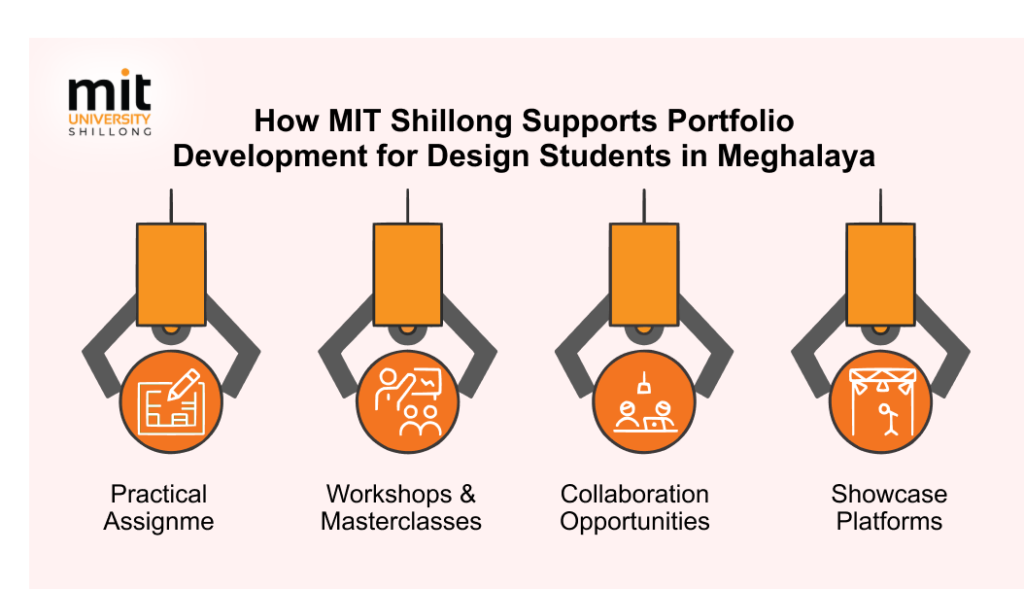
MIT University Shillong provides students with resources, mentorship, and exposure to develop strong portfolios.
Key Support Features:
- Practical Assignments: Real-world projects integrated into Bachelor of Design courses in Meghalaya
- Workshops & Masterclasses: Industry experts train students in tools, soft skills, and portfolio creation
- Collaboration Opportunities: Students work with startups and local businesses
- Showcase Platforms: Annual exhibitions allow students to display their student design portfolios
Being one of the best colleges in Shillong and known as a top Bachelor of Design college in Shillong, MIT Shillong ensures students graduate with portfolios that stand out globally.
Common Portfolio Mistakes Students Should Avoid
Direct Answer: Avoid these errors to make your portfolio strong and professional.
- Too Many Projects: Focus on quality, not quantity
- Lack of Case Studies: Explain the process, not just the final design
- Poor Visuals: Low-resolution images reduce impact
- No Updates: Keep adding recent projects and removing outdated ones
- Ignoring Feedback: Constructive criticism improves portfolio quality.
Avoiding these mistakes ensures your graphic design portfolio impresses potential employers and clients.
Conclusion
A strong design portfolio is crucial for students pursuing creative careers. It demonstrates practical skills, creativity, and problem-solving, often more than grades.
By starting early, choosing a niche, creating personal projects, collaborating with local businesses, participating in competitions, building case studies, learning essential tools, and establishing an online presence, students in Meghalaya can develop portfolios that impress employers globally.
Institutions like MIT University Shillong, one of the best colleges in Meghalaya, provide the support and resources needed for building an outstanding portfolio for design students.
For students, a well-crafted graphic design portfolio or UI UX design portfolio is a powerful tool to secure internships, jobs, and freelance opportunities, setting the foundation for a successful creative career.
FAQs
1. Do I need expensive tools or software to create a strong design portfolio?
No. Free tools like Figma, Canva, and GIMP can help create professional designs without high costs.
2. Can students in Meghalaya build a competitive portfolio without big-city exposure?
Yes. Collaborating with local businesses, personal projects, and online competitions can create a strong student design portfolio.
3. Should first-year students start working on their design portfolio?
Yes. Starting early allows students to collect work, experiment, and improve gradually.
4. How important are case studies for design portfolios?
Very important. Case studies show problem-solving skills, process, and impact, which impress employers more than final visuals alone.
Remember, your portfolio is not just a collection of work; it’s a story of your creativity, effort, and growth as a designer.