


Sustainable business management means running a business that creates value for people and the planet. In India and beyond, management education is reshaping business thinking. Through programmes in business schools, students learn how companies can adopt ethical leadership, reduce waste, and design models that consider environmental and social impact. For anyone considering a sustainability MBA in India, this shift offers fresh opportunities and relevant skills.
What sets this form of learning apart is its strong link to long-term thinking and community impact. Unlike traditional models that focus only on efficiency and growth, sustainable approaches prioritise fairness, responsibility, and balance across all stakeholders.

Why is there a shift toward green enterprises?
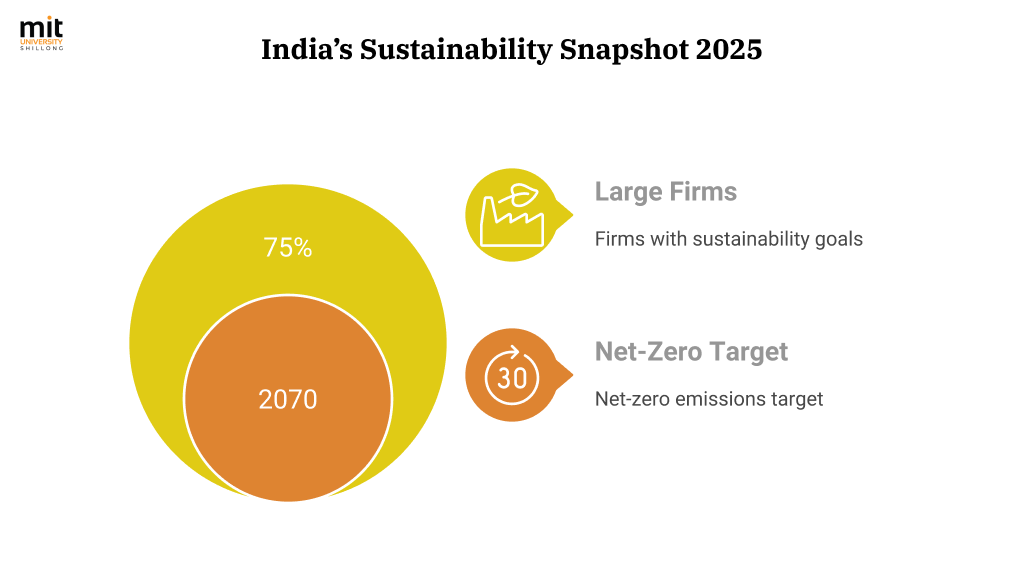
Content Structure:
- Top Section: “India’s Sustainability Snapshot 2025”
- 75% of large firms have set clear sustainability goals
- Net-zero emissions target: 2070
- Green jobs market: Rapid expansion trajectory
- Middle Section: “Sector-Wise Green Adoption”
- Manufacturing: Circular economy models
- Energy: Renewable transition
- IT: Carbon-neutral operations
- Agriculture: Sustainable practices
- Transport: Electric mobility
- Bottom Section: “Business Impact”
- Competitive advantage through sustainability
- Risk mitigation benefits
- ESG compliance requirements
Visual Style: Use green gradient palette with data visualization elements, icons for each sector
Today, sustainability is no longer a niche topic. Many companies place it at the core of their strategy. In India, around 75 % of large firms have set clear sustainability goals. Companies now see green business practices as a source of competitive advantage and risk mitigation. Government targets such as net‑zero emissions by 2070 also push the agenda for sustainable enterprise in the country.
This shift is evident across sectors such as manufacturing, transport, agriculture, energy, and IT, where eco-compliance and responsible sourcing are becoming standard expectations. A well‑designed green enterprises course helps students explore these ideas in depth and prepares them to meet future market requirements.
What does the management curriculum now include?
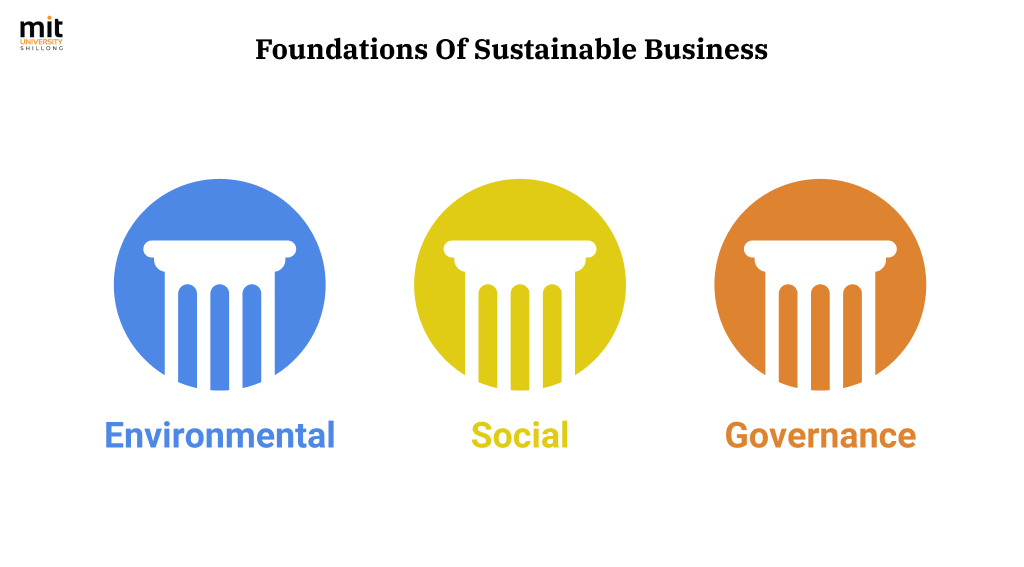
Modern management programmes cover a range of topics tailored for the green era. Key module areas include:
- ESG strategy (Environmental, Social & Governance)
- Circular economy models and resource‑efficient operations
- Ethical leadership and stakeholder management
- Sustainable finance and green supply‑chain design
Many institutions use case‑based learning and live industry projects. For instance, students might partner with local firms to audit their waste flows or design energy‑efficient operations. This real‑world work prepares graduates to apply classroom learning to practical business challenges.
In fact, in India, many institutes that used to focus only on traditional business management now offer specialised streams in sustainable business management or related fields. Students who previously considered an MBA in financial management colleges are now also considering options that align business strategy with sustainability principles.

What career paths open up in this area?
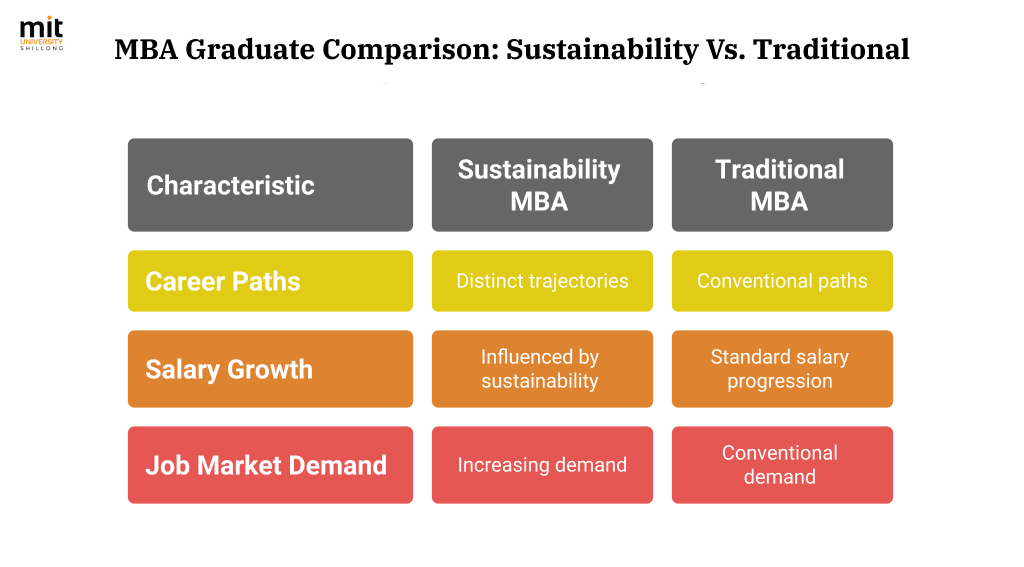
Content Structure:
- Left Column: Traditional MBA Focus
- Core roles: Financial Analyst, Operations Manager, Marketing Manager
- Industries: Banking, FMCG, Consulting
- Growth rate: Steady
- Right Column: Sustainability MBA Focus
- Core roles: ESG Analyst, CSR Manager, Sustainability Consultant, Green Project Lead, Circular Economy Manager
- Industries: Renewable Energy, Consulting, Manufacturing, Consumer Goods
- Growth rate: Rapid expansion
- Center Comparison:
- Job market demand: 45% higher for sustainability roles
- Salary premium: 15-25% in sustainability positions
- Future outlook: Green jobs projected to grow 3x faster
Visual Style: Split-screen with traditional blue tones (left) and vibrant green tones (right), with connecting arrows showing skill transferability
A management degree with a sustainability focus can lead to roles such as:
- Sustainability Consultant
- CSR Manager (Corporate Social Responsibility)
- ESG Analyst
- Green Project Lead
- Circular Economy Manager
These jobs are found in consulting, manufacturing, renewable energy, consumer goods, and large corporations with dedicated sustainability verticals. The global demand for managers with sustainability skills is rising. Within India, the green jobs market is expanding rapidly, as businesses and government agencies both require expertise in measuring and managing environmental impact.
While top colleges for MBA in finance still attract many students for roles in banking and investment, an increasing number are shifting their focus to sustainability-related careers in ESG and CSR.

How do campuses make an impact?
On campus, students don’t just study theory. They engage in practical initiatives, such as conducting energy audits of their institution, designing reusable waste systems, planting native species, or working with NGOs to promote social programmes. These activities strengthen learning and build problem‑solving skills. When a business school integrates such projects into its master’s curriculum, the students gain first‑hand experience in sustainable business operations. This influence extends into their careers and supports organisational change later on.

Shape a Career That Drives Real Change!
Management education is no longer just about profit and business growth. It is about purpose and building organisations that last, for both society and the environment. If you are considering pursuing studies in this domain, look into programmes that emphasise sustainability, ethics, technology, and real‑world exposure.
Whether you’re comparing the best MBA finance programs or planning a path through sustainability-focused courses, aligning your education with the future of business is essential.
Your next step could be to explore advanced credentials at institutions such as MIT University India, which offer management education designed for tomorrow’s challenges. Align your goals with a course that fits your interest in sustainable business and the green economy.
